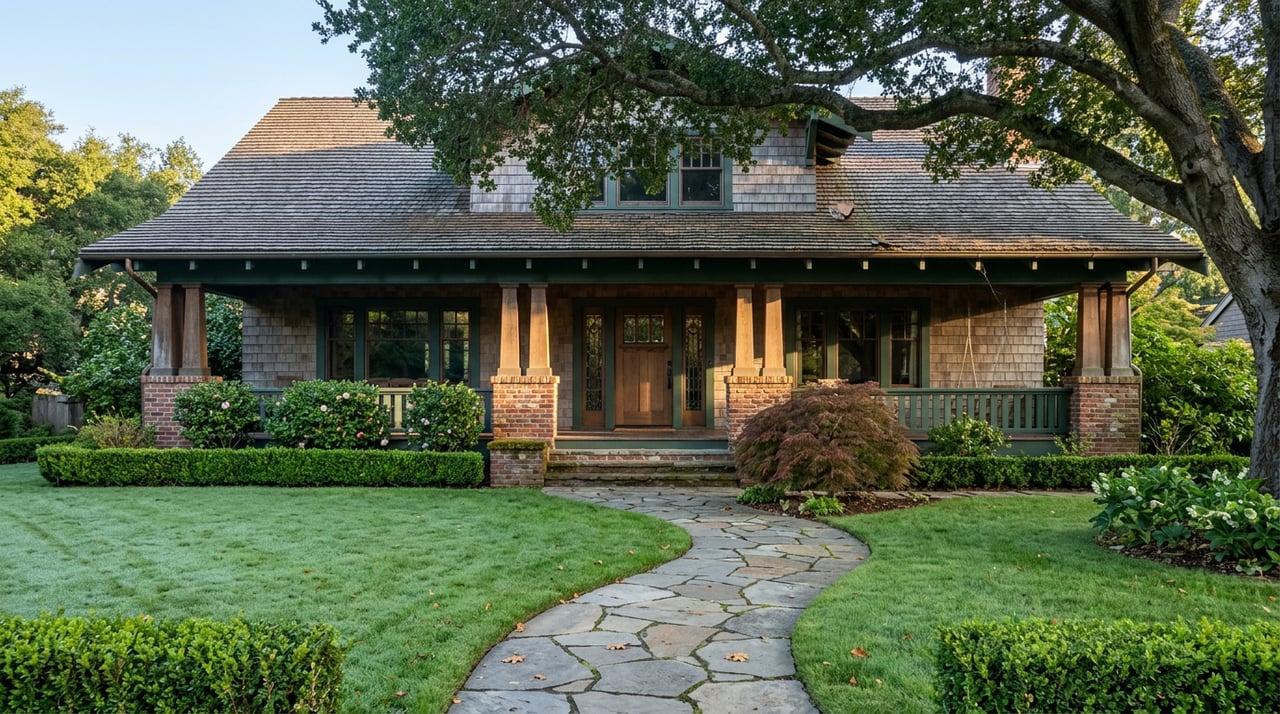
In December 2020, a five bedroom Arts and Crafts estate on Hillcrest Avenue in Pasadena's Langham District sold for $8.6 million. Under a standard California property tax calculation, a sale at that price would generate a tax bill somewhere north of $95,000 a year. The actual bill on that house, known locally as the Freeman House, runs under $20,000 a year.
That gap is not a clerical error and it is not a Prop 13 quirk from decades of ownership. The house had just changed hands. The number is small because the house carries a Mills Act contract with the City of Pasadena, and the Mills Act does something almost no other property in the county's tax system does: it throws out the sale price entirely and taxes the home as if it were a rental generating income, not an asset that just traded for eight figures.
If you are comparing Pasadena to other Los Angeles neighborhoods on the strength of median price alone, you are missing the number that actually determines what ownership costs. Two homes can list at the same price on the same street and carry entirely different tax futures, and the difference has nothing to do with square footage, lot size, or renovation quality. It has to do with a piece of paper filed with the city.
How the Math Actually Works
Every other property in Los Angeles County gets its assessed value from what it sold for, adjusted upward each year under Prop 13 limits. A Mills Act property gets valued a different way. The Los Angeles County Assessor calculates what the home would earn if it were rented out, then capitalizes that income into an assessed value. For most single family homes in a market like Pasadena, that income based number lands well below what the house would fetch at market sale, sometimes by half or more.
The city itself does not oversell the certainty of this. Its guidelines are explicit that there is no guaranteed savings, that assessed value is reviewed annually, and that the outcome depends on rent comparables, expenses, and interest rates that shift year to year. Pasadena's own historical figures put the average realized reduction at roughly 51 percent, with a documented range from about 20 percent to 75 percent depending on the property. The Freeman House sits at the extreme end of that range because of what it is: a nearly acre-lot, English Arts and Crafts estate designed by Arthur and Alfred Heineman in 1913, named among the dozen most architecturally significant heritage homes in the city.
That last detail matters more than it sounds like it should, because Pasadena does not hand this program out to every old house with charm.
The Cap That Decides Who Qualifies
Pasadena's Mills Act program carries a valuation ceiling. A single family home has to sit at or under a $2 million assessed value to qualify on the standard track. Most of the city's higher-value historic inventory would be locked out by that number alone, except that the guidelines carve out named exceptions: individually listed City of Pasadena historic monuments, works by Greene and Greene, and properties individually listed in the National Register of Historic Places can apply for an exception to the cap.
That single clause is why a $3 million or $8 million historic estate can still land a contract while a $2.1 million non-designated Craftsman two doors down cannot. The program was not built to subsidize expensive homes generally. It was built to protect a specific, named tier of architectural stock, and that tier happens to include some of the most expensive real estate in the city.
Pasadena Heritage, the local preservation nonprofit, has walked the public through exactly this tier on architectural tours of the Hillcrest neighborhood that stop at three houses in the Oak Knoll subdivision: the Robert R. Blacker House, completed in 1907 and one of Greene and Greene's defining American Craftsman commissions, the Cordelia Culbertson House from 1911 to 1913, the brothers' largest single commission, and the Freeman House itself. These are not abstract program categories. They are specific addresses the city and its preservation community treat as a distinct class, and the tax code treats them that way too.
The Program Only Grows So Fast
Even for a property that clears the valuation bar, the number of contracts the city hands out is capped. Pasadena's Planning Department has historically approved up to 20 new single family residential Mills Act contracts and 6 non-single-family contracts each year, covering multi-family, commercial, and industrial properties combined. Applications open early in the calendar year, typically in February, and are due by the end of May, with contracts recorded with the County Recorder by year's end so the reduced assessment shows up on the following October's tax bill.
Citywide, Pasadena carries roughly 380 properties under active Mills Act contracts based on the most recent published tally, a number that puts it among the highest concentrations of any city in the county outside Los Angeles proper, which carries closer to 950. Given the 20-per-year single family cap, that inventory did not appear overnight. It built up over more than two decades of the program's operation, one annual cycle at a time, which means the pool of eligible, un-contracted historic homes shrinks a little every year as owners who understand the program apply for it.
Who the Program Actually Rewards
Here is the part that surprises most buyers: the Mills Act is least useful to the people who have owned their homes the longest. If you have held a Pasadena property for twenty years, your Prop 13 base year assessment is likely already lower than what an income based Mills Act valuation would produce. Applying could raise your taxes, not lower them.
The program instead delivers its biggest benefit to owners who bought recently at current market prices, exactly the buyers who would otherwise be facing a tax bill tied to what they just paid. A Pasadena based architectural historian who has spent years assessing properties for the city's designation process puts it plainly: the people who benefit most are those who acquired their properties within the last decade. That is a strange kind of asymmetry to build into a preservation program, but it is also precisely why the mechanism matters to anyone actively shopping. If you are the buyer standing in front of a listing today, you are the person this program was built for, assuming the house qualifies and the city still has room in its annual quota.
What to Actually Check Before You Compare Two Listings
If you are weighing a historic Pasadena property against something in another neighborhood, the sale price is not the number to run your budget on. A few things are worth confirming before you do:
- Whether the home already carries a recorded Mills Act contract, since contracts run with the property and transfer to a new owner rather than resetting at sale.
- What the current assessed value is under that contract, which the seller's agent or a request to the Los Angeles County Assessor can confirm, rather than assuming a percentage off the sale price.
- Whether the property is designated as a landmark, a National Register listing, or a contributing structure in a historic district, since undesignated homes cannot apply at all without first pursuing designation.
- What maintenance obligations come attached to the contract, since Mills Act agreements require an approved rehabilitation and maintenance plan tied to the Secretary of the Interior's Standards, and lapses in upkeep can put the contract at risk.
None of this shows up on a listing sheet. It shows up in escrow, when a buyer's lender or title company asks for the recorded contract and the current tax bill stops matching what a market-rate calculation would suggest. For a design minded buyer weighing a Pasadena Craftsman against a comparable home elsewhere in Los Angeles, that difference in carrying cost can be the deciding factor long before it ever shows up in a mortgage payment.
A Few Quick Questions
Does a Mills Act contract transfer when the home sells? Yes. The contract runs with the property, not the owner, and the new owner inherits both the tax benefit and the maintenance obligations for the remainder of the ten year term, which then renews annually unless either party moves to terminate it.
Can any old house in Pasadena apply? No. The property generally needs to already be a designated landmark or historic monument, or individually listed or contributing to a district on the National Register, before an application is competitive. Some non-designated properties can be considered if a designation nomination is filed at the same time and recorded by year end.
Is the tax savings guaranteed once a contract is signed? No. The city is explicit that assessed value is reviewed annually and can shift with rental comparables, expenses, and interest rates, so the size of the benefit can change from year to year even after a contract is in place.
If you are trying to figure out what a specific Pasadena property actually costs to hold, not just what it costs to buy, that is exactly the kind of question worth a direct conversation before you write an offer. The Greg Holcomb Group works across Pasadena's historic districts regularly enough to know which addresses carry Mills Act contracts, which ones are strong candidates for designation, and what that means for your actual numbers. Let's connect and start a confidential conversation about what a specific property in Pasadena would really cost you to own.