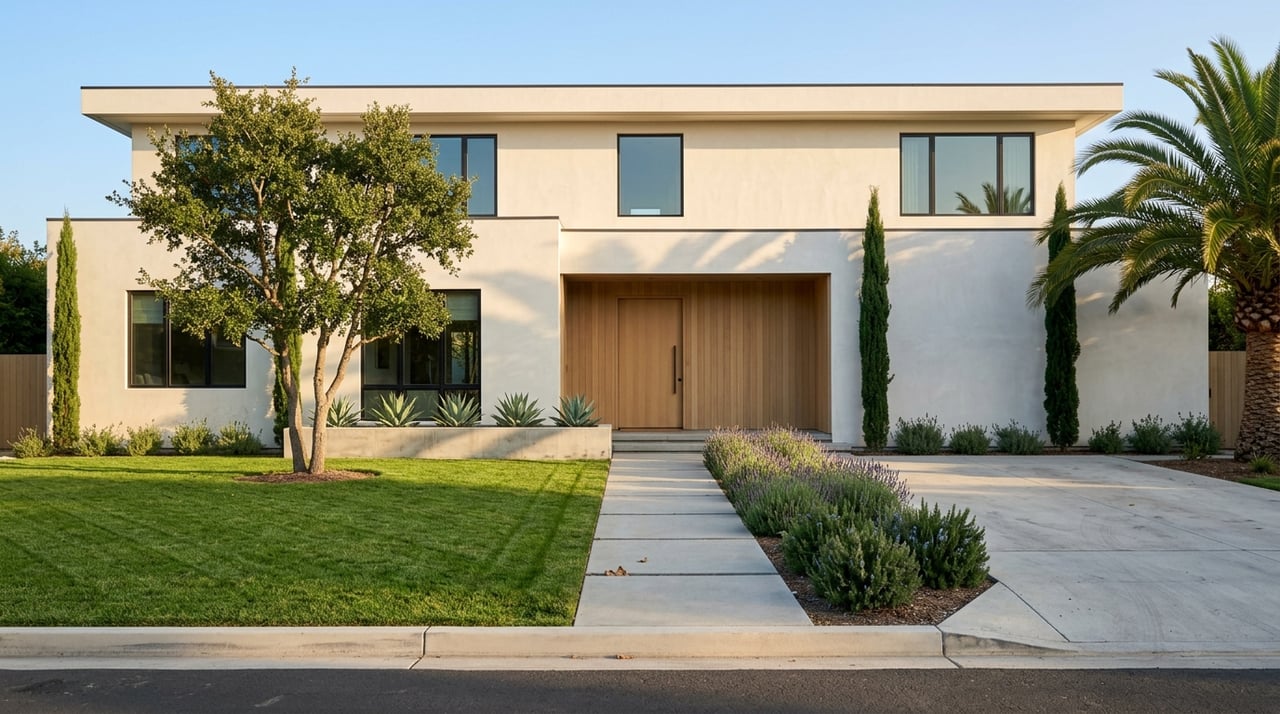
If you are house hunting in Beverly Hills, one of the first decisions is not just style or square footage. It is whether you are better suited to the Flats or a hillside home. Each offers a very different ownership experience, and understanding that difference early can save time, sharpen your search, and help you buy with more confidence. Let’s dive in.
Beverly Hills Flats vs hillside homes
In everyday real estate language, buyers often use the Flats to describe the more level single-family areas of Beverly Hills, especially south of Sunset Boulevard. The city does not formally use Flats in its zoning system. Instead, Beverly Hills divides single-family properties into the Central Area, Hillside Area, and Trousdale Estates.
For most buyer conversations, the simplest comparison is Central Area versus Hillside Area. In broad terms, the Central Area aligns with what many people mean by the Flats, while the Hillside Area is generally north of Sunset Boulevard, with some boundary variation in certain locations.
Why the location category matters
The difference between these areas is not only visual. It affects how a home may be altered, how the lot functions day to day, and what kind of due diligence makes sense before you write an offer.
In the Central Area, exterior changes visible from a public street can trigger design review. That can include façade remodels, painting, window replacement, and new roofing. The city reviews these changes for compatibility, scale, mass, neighborhood character, and prevailing architectural styles.
In the Hillside Area, there is no design review process in the same way. Instead, the code places more attention on floor area, height, setbacks, parking, walls, fences, hedges, landscaping, accessory structures, landform alteration, and view preservation.
For a design-minded buyer, that distinction matters. In one area, the street-facing architectural expression may be a central part of your future planning. In the other, the site itself often becomes just as important as the house.
Central Area offers a clearer review path
If you are drawn to homes where architecture reads clearly from the street, the Central Area may feel more straightforward. Beverly Hills uses a broad style catalog that includes American Colonial, Rural European Revival, Spanish Colonial, Contemporary, Period Revival, Craftsman, Bungalow, Ranch, and Art Deco, among others.
That catalog helps guide how proposed exterior work is evaluated. It can also affect whether a project may qualify for a faster staff-level review path. For buyers considering cosmetic or visible exterior changes, this creates a more standardized framework for planning.
This does not mean every update is simple. It does mean that visible changes are evaluated through a defined design lens, which can be useful if architectural consistency matters to you.
Hillside homes are shaped by the site
A hillside property often asks you to think beyond the residence itself. The city’s Hillside R-1 permit application calls for grading plans by a geotechnical or civil engineer, cut-and-fill calculations, level pad information, soils reports, retaining-wall sections, import and export quantities, and view-preservation analysis.
That is a strong sign that in the hills, architecture is closely tied to topography. A compelling house on paper may live very differently depending on the slope, the driveway approach, the pad size, and the extent of retaining walls or terracing.
For some buyers, that complexity is part of the appeal. A hillside home can feel more tucked away and can offer a different relationship to outlook, privacy, and terrain. But it is wise to evaluate the site with as much care as the floor plan.
Usable outdoor space matters more than lot size
One of the most common mistakes buyers make is assuming that a larger lot automatically means more usable outdoor living. In Beverly Hills, the city notes that there is no universal maximum size for single-family homes. What can be built depends on lot size, setbacks, height limits, and buildable pad, with topography adding another layer in the Hillside Area.
That means usable pad area often matters more than the raw lot number. On a hillside parcel, terraces, retaining walls, and drainage planning can shape how much of the land truly functions for dining, lounging, play, or entertaining.
When you tour listings, pay close attention to practical questions like these:
- How much level pad is already in place?
- Is the driveway steep or easy to navigate?
- Are outdoor spaces connected and usable?
- How many retaining walls are present, and what condition are they in?
- Does the home already sit on a fully developed pad?
These details can tell you more about day-to-day livability than square footage alone.
Daily living feels different in each setting
For many buyers, the Flats offer easier circulation. A flatter site often means simpler arrivals, more direct guest access, and a more straightforward front-door relationship.
That can matter if you entertain often, expect regular service access, or simply prefer a property that feels easy to move through from curb to entry to backyard. In practical terms, flatter conditions also tend to reduce the number of site-specific complications that can affect exterior work.
Hillside homes often create a different rhythm. Driveways, stairs, screening for mechanical equipment, drainage elements, and retaining walls may all play a larger role in how the property functions and how it is maintained over time.
The permit framework reflects that reality. It specifically addresses details like roof-mounted equipment screening, gutters and downspouts, and cross-sections through the site and adjacent properties. For a buyer who values seclusion and outlook, that trade-off may be well worth it.
Landscaping and maintenance can be more involved
Landscape planning in Beverly Hills is not just an aesthetic issue. The city requires a landscape documentation package for any new or altered landscaped area, and grading plans must minimize erosion and runoff.
The rules also state that turf is not allowed on slopes greater than 25% where the toe of the slope meets impermeable hardscape. For hillside owners, this reinforces a simple point: the landscape is part of the property’s function, not just its appearance.
If you are comparing a Central Area home with a hillside property, think carefully about the level of ongoing stewardship you want. A hillside setting may ask more from you in terms of drainage awareness, erosion prevention, and landscape upkeep.
Risk and due diligence deserve extra attention
Every buyer should complete careful due diligence, but hillside purchases deserve an especially thorough review. Beverly Hills states in its General Plan that hillside areas pose the greatest landslide hazard. The city also notes that the hills north of Sunset Boulevard are designated as a Very High Fire Hazard Severity Zone.
Beverly Hills publishes a Landslide and Liquefaction Zones Map as well as a current Hazard Mitigation Plan. Before making an offer on a hillside parcel, it is wise to review the relevant hazard maps and understand how the site has been improved over time.
You will also want to ask focused questions such as:
- Has there been prior grading work?
- Were retaining walls added or modified?
- Has landscaping been designed with erosion control in mind?
- Are future changes likely to require technical review?
These are not reasons to avoid hillside homes. They are reasons to evaluate them with precision.
How to decide which setting fits you
The right choice usually comes down to how you want to live, not just what photographs well online. Both settings can be exceptional, but they serve different priorities.
Choose the Flats if you value:
- Easier day-to-day access
- Simpler guest circulation
- A clearer front-door relationship to the street
- Street-visible architecture and façade presence
- A more standardized review path for visible exterior changes
Choose a hillside home if you value:
- A more tucked-away setting
- A site that may deliver broader outlooks or views
- A stronger relationship to terrain and topography
- Comfort with retaining walls, grading considerations, and more site-driven maintenance
- The nuance of evaluating pad quality, driveway slope, and landform as part of the purchase
A smart way to narrow your search
When you review Beverly Hills listings, start with the city’s actual area designation rather than relying on casual neighborhood language. Confirm whether the property is in the Central Area or Hillside Area before making assumptions about what may be possible.
Then filter homes through a practical lens. Some of the most useful points to compare are location category, amount of level pad, driveway slope, visibility from the street, retaining-wall condition, and whether the existing architecture already aligns with your taste.
For buyers with a strong point of view on design, this is where a curated search becomes valuable. The goal is not just to find a beautiful home. It is to find a property whose site conditions, review framework, and long-term stewardship match the way you actually want to live.
If you are weighing Beverly Hills Flats against a hillside property, a measured, property-by-property review can reveal more than broad assumptions ever will. For a confidential conversation about Beverly Hills homes with architectural and site nuance in mind, connect with The Greg Holcomb Group.
FAQs
What does Flats mean in Beverly Hills real estate?
- In buyer conversations, the Flats usually refers to the more level single-family areas of Beverly Hills, especially south of Sunset Boulevard, though the city formally uses Central Area, Hillside Area, and Trousdale Estates.
What is the difference between Beverly Hills Central Area and Hillside Area?
- The Central Area is generally associated with flatter sites and design review for street-visible exterior changes, while the Hillside Area is shaped more by rules around topography, grading, setbacks, view preservation, and site engineering.
Are exterior remodels reviewed differently in Beverly Hills Flats and hillside homes?
- Yes. In the Central Area, visible exterior changes can trigger design review, while the Hillside Area does not use that same design review process and instead focuses more heavily on site-related development standards.
What should buyers check before buying a Beverly Hills hillside home?
- Buyers should confirm the property’s area designation, review hazard maps, ask about grading and retaining-wall history, evaluate driveway slope and usable pad area, and understand whether future changes may require technical review.
Why is usable pad area important in Beverly Hills hillside properties?
- Usable pad area helps determine how much of the lot functions comfortably for daily living and outdoor use, which can matter more than total lot size on a sloped parcel.
Are Beverly Hills hillside homes harder to maintain?
- They can be more involved because retaining walls, drainage, stairs, landscape upkeep, and slope-sensitive design features often play a larger role in the property’s long-term stewardship.