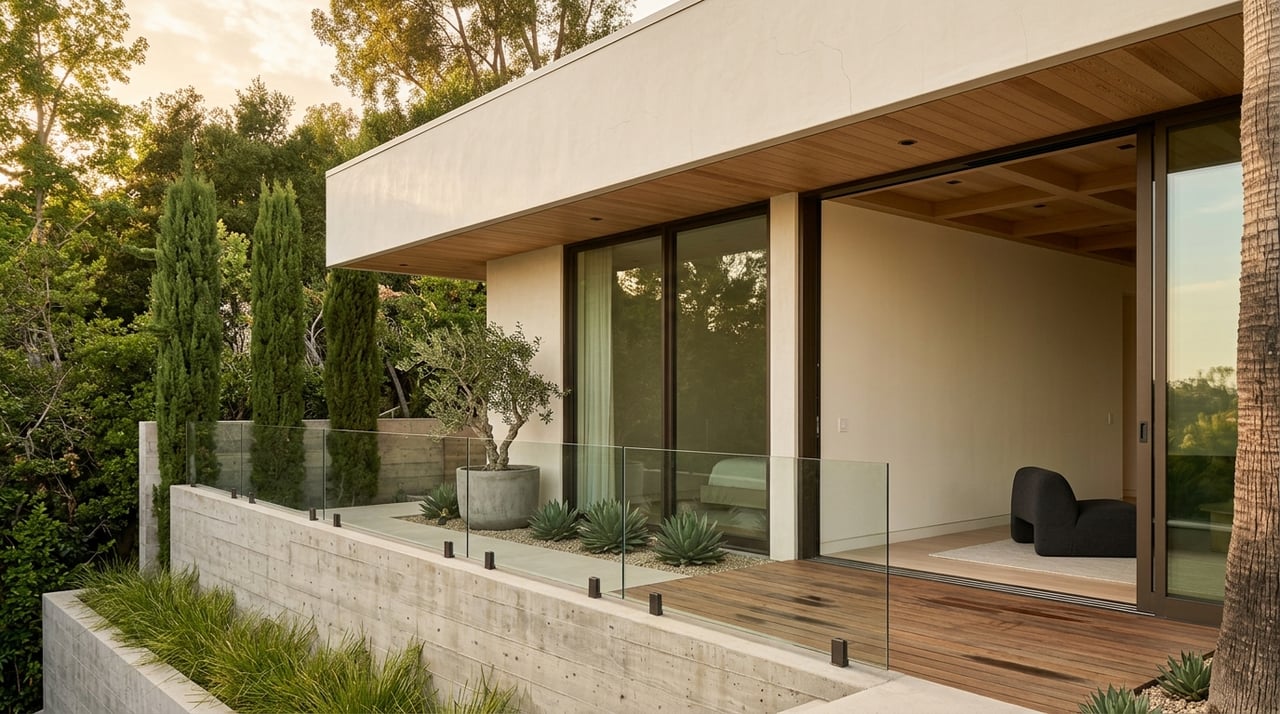
If you are drawn to a hillside architectural home in the Hollywood Hills, you are probably not looking for something ordinary. You may be chasing a certain quality of light, a stronger connection to topography, or that rare feeling of living inside a piece of Los Angeles design culture. The appeal is real, but so are the practical questions. This guide will help you look past the romance of the view and evaluate what matters most before you buy. Let’s dive in.
Why hillside architecture matters here
The Hollywood Hills is not just a backdrop for dramatic homes. Its identity is closely tied to hillside architecture that responds directly to steep land, privacy challenges, and long views. Landmark homes like the Chemosphere, the Stahl House, the General Panel Residence, and the Bailey House show how deeply design in this area is shaped by the site itself.
That context matters when you shop for a home here. In Los Angeles street-design guidance, hillside or mountainous terrain generally means land averaging more than a 5% grade. In practical terms, that often means more constraints, more engineering considerations, and more variation from one property to the next than you would find on flatter lots.
The planning backdrop also continues to evolve. Hollywood Hills sits within the Hollywood Community Plan area, and that plan was updated in January 2025. If you are comparing properties or thinking ahead to a renovation, it is wise to verify current planning rules rather than rely on older neighborhood assumptions.
Look beyond the view
A striking view can make a hillside home unforgettable. Still, the best hillside architectural homes do more than frame the skyline. They also solve for sun, airflow, access, privacy, and day-to-day livability.
The Bailey House is a useful example of site-responsive design. It was oriented on a north-south axis for seasonal sun control, with sliding doors for cross-ventilation and a reflective pool used as part of the climate strategy. That kind of thinking is worth noticing when you tour a property, because orientation is not just an aesthetic detail.
Ask yourself how the home feels at different times of day. A house that captures light well, manages heat thoughtfully, and creates a comfortable indoor-outdoor rhythm may perform better over time than one that simply photographs well at sunset.
Evaluate usable outdoor space
In the Hollywood Hills, lot size can be misleading. A large parcel on paper may include steep slope area that is visually impressive but not especially functional. What often matters more is how much of the outdoor space feels level, usable, and easy to maintain.
Many hillside homes trade lawns for terraces, decks, pools, retaining walls, and stepped paths. That is not a flaw. In fact, some of the most elegant homes in the area use topography to create outdoor rooms with a strong sense of sequence and privacy.
When you tour a property, focus on the spaces you would actually use. Consider where you would dine outside, where guests would gather, how easily you can move between interior and exterior areas, and whether the maintenance burden fits your lifestyle.
Privacy is more nuanced than it looks
One reason many buyers are drawn to hillside homes is privacy. A home above the street can feel removed from the city, even when it sits minutes from Sunset Boulevard or the studios. But privacy in the hills is rarely automatic.
A property may be hidden from the street and still feel exposed to neighboring homes, uphill or downhill sightlines, canyon traffic, or even drone visibility. Dramatic glazing can heighten the architectural experience while also making privacy more complex.
As you evaluate a home, pay attention to window placement, mature landscaping, screening, and how outdoor living areas relate to adjacent lots. The key question is not simply whether there is a view. It is whether the view works both ways.
Access can shape daily life
For many hillside buyers, access becomes the hidden value driver. Two homes may offer a similar level of design and similar square footage, yet one will be far easier to live with because the approach is simpler and more forgiving.
Driveway geometry, street width, guest parking, and emergency access deserve close attention. Los Angeles hillside regulations can affect future construction and additions, especially on lots fronting a Substandard Hillside Limited Street. Depending on the property and the scope of future work, that can trigger requirements related to street dedication, minimum roadway width, continuous paved access, added parking, sewer connections, and fire sprinklers for certain new or substantially modified one-family dwellings.
This is why the approach to the home matters as much as the front door. A narrow, steep, or legally complicated access route can affect convenience today and flexibility later. A well-resolved driveway with clean turning space and straightforward access is often more valuable than buyers first realize.
Check street and driveway conditions early
Hillside streets in Los Angeles often come with planning and engineering complexity. Private streets, dead-end conditions, and substandard-width rights-of-way are common issues in this terrain. These details can influence not only comfort and parking, but also what may be possible if you want to improve the property in the future.
Before you get too far into a purchase, confirm whether the street is public or private and whether it is considered standard or substandard. Also look at driveway slope, vehicle clearance, turnaround space, and how service vehicles or emergency responders would reach the house.
These are not minor technicalities. They are part of how a hillside home functions in real life, and they can have a direct effect on your ownership experience.
Understand fire-zone implications
Wildfire exposure is a central issue for hillside ownership in Los Angeles. The City identifies Very High Fire Hazard Severity Zones using Los Angeles Fire Department boundaries under state law, and brush clearance in the hills is a year-round responsibility.
If a parcel is in a Very High Fire Hazard Severity Zone, that status can affect both maintenance and future construction. New or altered construction may need to meet Wildland-Urban Interface requirements such as ember-resistant vents and ignition-resistant exterior materials.
As a buyer, you should ask whether the property is in a Very High Fire Hazard Severity Zone and what the most recent brush-clearance or inspection status is. This helps you understand both current obligations and the likely path for future upgrades.
Review geology, drainage, and slope history
A beautiful hillside setting also comes with ground conditions that deserve serious attention. Los Angeles Department of Building and Safety guidance states that hillside exploratory work should be performed by a licensed soils engineer and engineering geologist. That alone tells you how important subsurface conditions can be.
The City’s emergency-management guidance warns that landslides, mudflows, and slope failures can be triggered by heavy rain, poor irrigation, utility leaks, and improper excavation. For that reason, buyers should request geotechnical reports, grading records, drainage work, retaining-wall history, and any records of prior slope movement or repairs.
In many transactions, these documents are as important as the inspection report. A home can be architecturally exceptional and still require careful review of how the site has been stabilized and maintained over time.
Historic status can affect flexibility
Some of the most compelling homes in the Hollywood Hills come with architectural pedigree. That can be a major part of their appeal, but it can also shape what you are allowed to change.
If a property is a Historic-Cultural Monument, sits in an HPOZ, or has SurveyLA significance, exterior work may require historic review. Qualifying historic properties may also be eligible for Mills Act property-tax relief, which can affect long-term ownership economics.
This is worth confirming early in the process. Historic status can support cultural value and stewardship, but it may also limit renovation flexibility. If you are buying with plans to expand, re-clad, replace windows, or substantially alter exterior features, you should understand the review path before moving forward.
Permit history matters more than buyers think
Permit and zoning history should be checked before your offer is fully committed. LADBS advises buyers to use property records to understand what has been permitted, and in some areas of the hills additional planning review may apply. For example, Hollywoodland has a separate Specific Plan with a specific-plan-clearance process for building permits.
This matters because assumptions can be costly. A deck enclosure, retaining wall, addition, pool feature, or driveway improvement may look settled on site but still raise questions if records are incomplete or future work triggers new review.
A careful review of permits, zoning, overlays, and any specific plan or historic designation can save time and help you avoid surprises after closing.
A smart buyer checklist
Before you move forward on a hillside architectural home in the Hollywood Hills, keep this checklist in mind:
- Confirm zoning, overlays, and any specific plan or historic designation.
- Ask whether the parcel is in a Very High Fire Hazard Severity Zone.
- Verify brush-clearance or inspection status.
- Check whether the street is public or private, standard or substandard.
- Review driveway slope, turnaround space, and overall access.
- Request permit history, grading records, drainage work, and geotechnical reports.
- Ask about retaining walls and any prior slope repairs.
- Identify which exterior changes may require historic review, hillside review, or fire-code upgrades.
- Measure genuinely usable outdoor space, not just total lot size.
Buying with design and discipline
The best Hollywood Hills architectural homes ask you to balance emotion with discipline. You may fall for the silhouette, the glass, the privacy, or the way the house meets the ridge. Those instincts are often right. But in hillside real estate, beauty and due diligence need to travel together.
A thoughtful purchase means understanding not just the architecture, but also the land beneath it, the road leading to it, and the rules that shape what comes next. When you evaluate a property through that wider lens, you are better positioned to buy a home that is as sound as it is striking.
If you are considering a hillside architectural home and want a measured, design-literate perspective on the Hollywood Hills market, The Greg Holcomb Group can help you navigate the process with discretion and care.
FAQs
What should you check before buying a hillside home in Hollywood Hills?
- Confirm zoning, overlays, street type, fire-zone status, permit history, geotechnical records, drainage history, retaining walls, and the amount of usable outdoor space.
Why is access so important for a Hollywood Hills architectural home?
- Street width, driveway slope, guest parking, and emergency access can affect daily convenience, future improvements, and how easily the property functions over time.
Can historic status affect remodeling a Hollywood Hills home?
- Yes. If a property is a Historic-Cultural Monument, lies in an HPOZ, or has SurveyLA significance, some exterior work may require historic review.
How does fire-zone status affect a hillside home in Los Angeles?
- If a parcel is in a Very High Fire Hazard Severity Zone, brush clearance is an ongoing responsibility and some new or altered construction may need Wildland-Urban Interface features.
Why is lot size less useful than usable outdoor space in the Hollywood Hills?
- On steep sites, a larger lot may include significant slope area, while the most valuable outdoor space is often the part that feels level, functional, and easy to maintain.